
Binding, innovative and sustainable: One Health Action Plan for StAR 2024 – 2027
10.07.2024 - Antibiotic resistance continues to grow worldwide, increasingly threatening the effectiveness of antibiotics used to treat infections and placing a financial burden on health systems. According to the Organisation for Economic Co-operation and Development (OECD) forecasts, the resulting additional health costs for Switzerland will amount to CHF 102–444 million per year by 2050. On 26.06.2024, the One Health Action Plan for the Swiss Strategy on Antibiotic Resistance (StAR) 2024 – 2027 was adopted by the Federal Council. The federal measures successfully implemented under StAR since 2016 will thus be further strengthened.
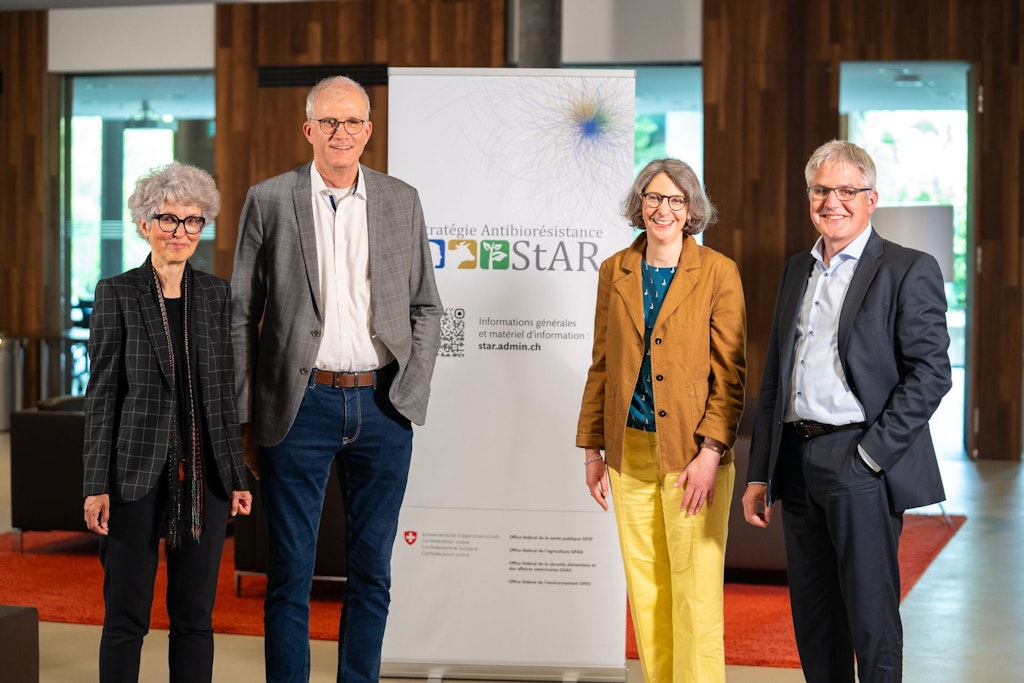
As resistant pathogens do not respect national borders, a coordinated, cross-sectoral approach is required if they are to be successfully combated. This One Health principle has long been pursued by the federal offices responsible for public health (FOPH), food safety and veterinary affairs (FSVO), agriculture (FOAG) and the environment (FOEN) as part of the Swiss Strategy on Antibiotic Resistance (StAR). With the One Health Action Plan for StAR 2024–2027, the Federal Council is now further intensifying the cross-sectoral activities.
The key elements of the Action Plan are as follows:
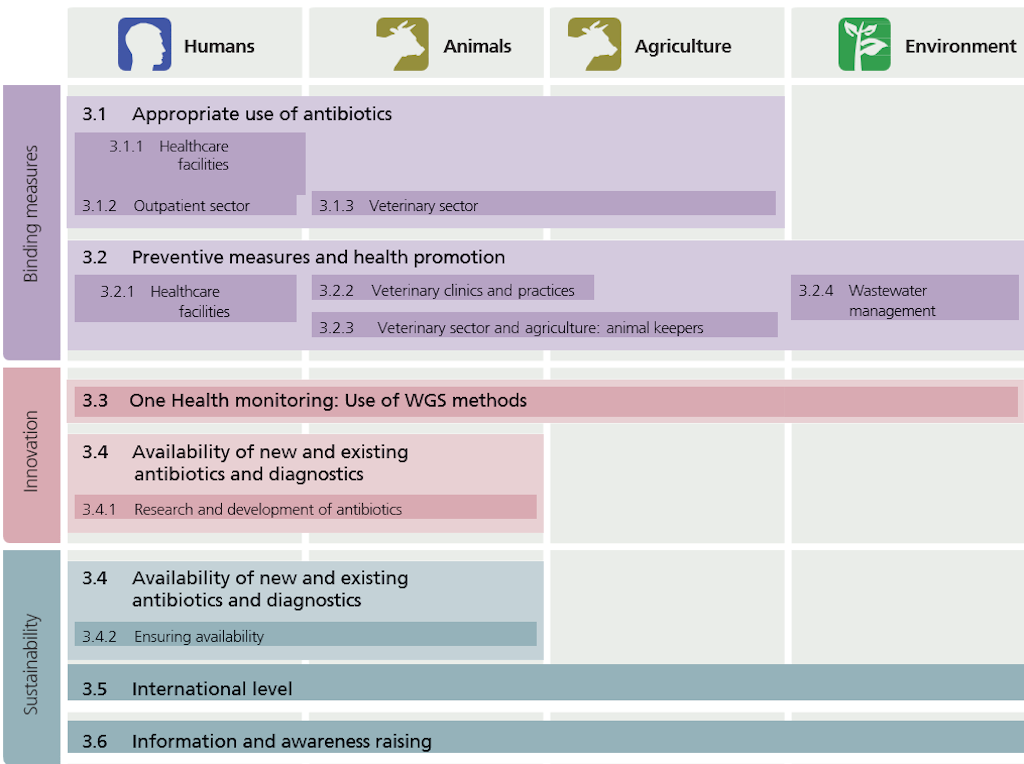
- More binding measures: The tools already developed (e.g. treatment guidelines) are to be more widely publicised and their adoption promoted, with the goal of ensuring routine application. This will be supported by the expansion of stewardship programmes in hospitals, practices and veterinary clinics; the development and expansion of antibiotic use benchmarks for veterinarians, animal keepers and physicians; and programmes for infection prevention and control in healthcare facilities and veterinary clinics and practices.
- Innovation: Increasing use is to be made of new scientific knowledge and technologies. For example, One Health cross-sectoral resistance monitoring via systematic collection of sequence data is to be further developed, contributing to an improved understanding of resistance transmission pathways. New incentive-based approaches will be assessed to improve the availability of antibiotics.
- Sustainability: As antimicrobial resistance is an ongoing challenge, structures and processes for addressing it need to be assured over the long term. This will include the establishment of legal foundations.
Six main action areas
The One Health Action plan for StAR focuses on six main action areas and defines specific national goals with annual milestones for the planned activities.
Activities in focus
Resistances are to be detected at an early stage and transmission chains broken: in human medicine, for example, when certain risk groups are admitted to hospital (e.g. patients who have undergone a medical procedure abroad), systematic screening is to be carried out for multidrug‑resistant pathogens. By 2027, 90% of Swiss hospitals are to conduct such screening programmes in accordance with national guidelines.
In addition, measures which promote animal health should reduce the use of antibiotics in agriculture. Guidelines, information materials and decision aids must become more widely known and user-friendly. The recorded data on antibiotic use in veterinary medicine is to be communicated back to veterinarians and animal keepers: in future, a benchmarking system should make it possible to compare one’s own antibiotic use with that of others. The aim is for Switzerland to be able to consolidate its position – both in veterinary and in human medicine – as an international leader in appropriate antibiotic use.
In the environmental sector, antibiotics and resistant pathogens reaching the environment via untreated wastewater, especially during heavy rainfall, are to be minimised. To this end, it is important for wastewater management to be guided by best practices.
Collaboration between numerous actors
With the planned activities in the One Health Action Plan for StAR 2024 – 2027, the federal authorities are addressing future challenges in the prevention and control of antimicrobial resistance. These efforts rely on collaboration with the cantons and with numerous other actors in the human and animal health, agriculture and environment sectors.