
Event for hospital professionals
WAAW 2025 - Fifty professionals took part in the Advancing Antimicrobial Stewardship Together event organised in Bern as part of the StAR-3 project. The diverse programme focused on the implementation of antimicrobial stewardship in hospitals.
The morning programme
The morning programme was aimed at members of the StAR-3* project working groups. In small groups, participants discussed challenges and explored possible solutions. They also contributed to shaping the expanded edition of the handbook planned for the end of 2026, which is intended to be presented in a much more engaging format than the first edition.
The afternoon programme
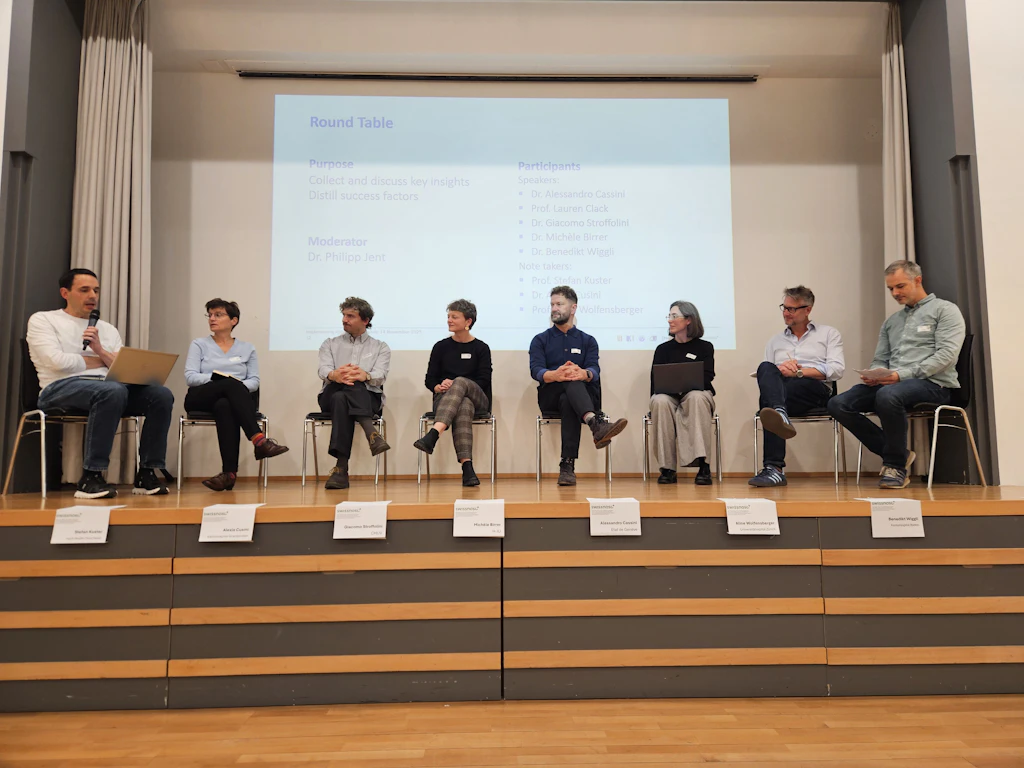
The afternoon session was aimed at a broader audience. Fifty professionals took part in the event. Lauren Clack (University of Zurich) and Alessandro Cassini (Cantonal Medical Officer, Geneva) presented implementation strategies for antimicrobial stewardship programmes. Experience reports from Lausanne University Hospital (CHUV), Hôpital du Jura and Kantonsspital Baden addressed the challenges of practical implementation. These issues were also discussed during an inspiring panel discussion with experts and practitioners. Opportunities for personal exchange and networking rounded off the diverse programme. Further information on key considerations for implementing antimicrobial stewardship programmes and the practical experiences presented can be found in the talks available on the Swissnoso website.
A further event to promote professional exchange and strengthen the antimicrobial stewardship community is planned for autumn 2026.
Results of the monitoring of antimicrobial stewardship activities published in Swiss Medical Weekly
The project partnership is pleased to announce the publication of the monitoring results on antimicrobial stewardship activities in Swiss Medical Weekly. The monitoring shows that progress has been achieved since 2017. In 2024, most participating hospitals had stewardship activities in place, and more than half had established a formal antimicrobial stewardship programme. Gaps remain in the internal governance and coordination of activities within hospitals. National initiatives can support the implementation and sustainability of such programmes.
More information on the benefits of formal antimicrobial stewardship programmes in hospitals can be found in the article.
* StAR-3: Implementing Antimicrobial Stewardship Programs in Swiss Acute Care Hospitals is a three-year project that was launched in September 2023. It is implemented by Swissnoso together with the six partner organisations SGInf, SGSH, GSASA, SGM, ANRESIS and FMH, as well as the associated partner PIGS, and is supported by the Federal Office of Public Health (FOPH) under the national Antibiotic Resistance Strategy (StAR). H+ The Hospitals of Switzerland and the Swiss Conference of Cantonal Health Directors (GDK) participate as observers.
The project partners:
- SGinf – Swiss Society for Infectious Diseases
- SSHH – The Swiss Society for Hospital Hygiene
- GSASA – The Swiss Association of Public Health Administration and Hospital Pharmacists
- SSM –The Swiss Society for Microbiology
- ANRESIS – The Swiss Centre for Antibiotic Resistance
- FMH – The Swiss Medical Association
- PIGS – Pediatric Infectious Disease Group of Switzerland
Further information

First Swiss monitoring of antimicrobial stewardship
16.06.2025 - Monitoring carried out in 2024 shows that 86% of hospitals have antimicrobial stewardship activities in place. The majority of these hospitals monitor antibiotic use and have evidence-based guidelines for antibiotic treatment or perioperative antibiotic use. Half of the hospitals with stewardship activities report having a formal antimicrobial stewardship program.

Stewardship implementation tools: winning projects
10.03.2025 - The StAR-3 project aims to offer a comprehensive handbook to support the implementation of antimicrobial stewardship programmes in hospitals. To develop relevant implementation tools, a call for project proposals was conducted. Of the 22 projects submitted, seven receive financial support. The resulting implementation tools will be made available to hospitals as part of the comprehensive handbook at the end of 2026.